
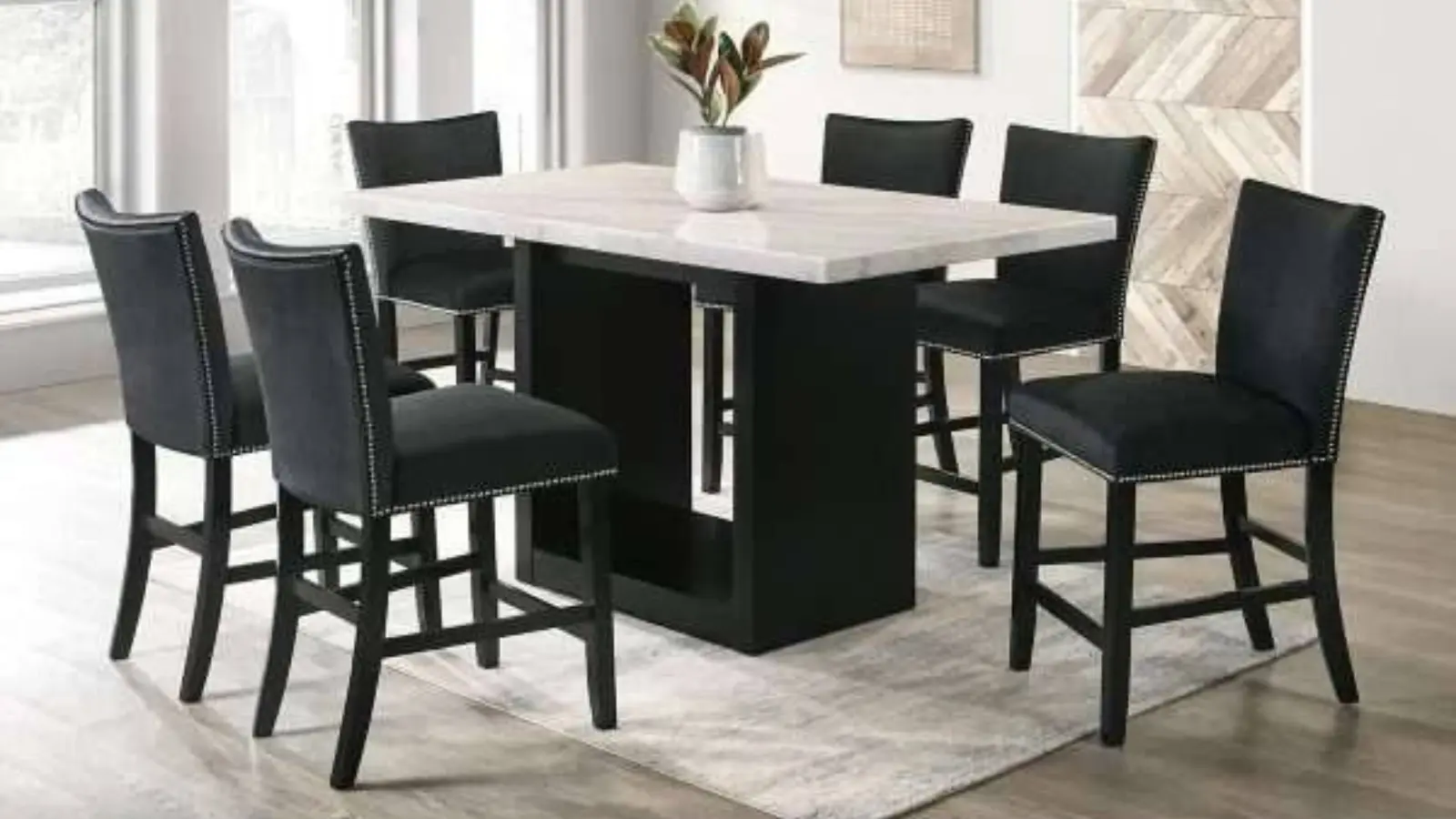
A counter height table is a dining or kitchen table designed to sit higher than a traditional dining table, typically measuring 34 to 36 inches (86 to 91 cm) from the floor to the tabletop.
It is commonly paired with counter-height stools or chairs and is popular in modern kitchens, breakfast nooks, dining areas, and open-plan living spaces.
People search for counter height table dimensions to determine whether a table will fit their room, match their kitchen island, and provide comfortable seating.
Choosing the right height also depends on the available legroom, the height of the chairs, and the number of people who need to sit around it.
Whether you want a compact table for a small apartment or a spacious dining table for family meals, understanding standard dimensions will help you make a practical and attractive choice.
1. What Is a Counter Height Table?
A counter height table is a table built to approximately the same height as many kitchen counters. It creates a slightly elevated seating arrangement compared with conventional dining furniture.
These tables are used for casual meals, coffee breaks, entertaining guests, and additional workspace. Their height can also make a kitchen or dining area feel more connected to an adjoining counter or island.
Key features of counter-height furniture
- Elevated tabletop: Usually 34–36 inches high.
- Matching seating: Typically used with stools that have seats around 24–26 inches high.
- Versatile designs: Available in round, square, rectangular, and extendable styles.
- Flexible placement: Suitable for kitchens, breakfast areas, studio apartments, and dining rooms.
- Casual appearance: Often creates a relaxed, contemporary atmosphere.
Counter height vs. bar height
Counter height and bar height are not the same. A bar-height table is taller and generally requires higher stools.
| Table type | Typical table height | Typical seat height |
|---|---|---|
| Standard dining table | 28–30 inches (71–76 cm) | 17–19 inches (43–48 cm) |
| Counter height table | 34–36 inches (86–91 cm) | 24–26 inches (61–66 cm) |
| Bar-height table | 40–42 inches (102–107 cm) | 28–30 inches (71–76 cm) |
These measurements are common furniture standards rather than universal rules. Always check the manufacturer’s specifications before purchasing a table and chairs together.
2. What Is the Standard Counter Height Table Height?
The standard counter height table measurement is generally 36 inches (91.4 cm), although many models measure between 34 and 36 inches.
This height is popular because it aligns reasonably well with common kitchen counter dimensions and allows people to sit comfortably on appropriately sized stools.
Common table heights explained
- 34 inches: A slightly lower option that may work well for shorter users or specific furniture designs.
- 35 inches: A middle-ground measurement for kitchens and breakfast areas.
- 36 inches: A widely used standard that coordinates with many kitchen counters.
When measuring, start at the floor and measure vertically to the top surface of the table. Include the tabletop thickness in the final measurement.
Why height matters
The right table height affects more than appearance. It determines how easily people can sit down, place their legs underneath the tabletop, eat meals, and move around the room.
A table that is too tall can force users to raise their shoulders while eating. One that is too low can make the seating arrangement feel cramped or awkward.
For the best fit, consider:
- The height of the intended users.
- The seat height of your chairs or stools.
- The thickness and shape of the tabletop.
- The position of table legs, stretchers, and support bars.
- The distance between the table and nearby kitchen cabinets.
3. Counter Height Table Dimensions: Width, Length, and Depth
Height is only one part of selecting suitable furniture. Table length and width determine how many people can sit comfortably and how much floor space the table will occupy.
The best dimensions depend on the room, the shape of the table, and whether it will be used every day or mainly for entertaining.
Common sizes by table shape
| Table shape | Common dimensions | Typical seating |
|---|---|---|
| Small square | 30 × 30 inches (76 × 76 cm) | 2 people |
| Medium square | 36 × 36 inches (91 × 91 cm) | 2–4 people |
| Small rectangle | 36 × 24 inches (91 × 61 cm) | 2 people |
| Medium rectangle | 48 × 30 inches (122 × 76 cm) | 4 people |
| Large rectangle | 60 × 36 inches (152 × 91 cm) | 4–6 people |
| Round | 36–42 inches in diameter (91–107 cm) | 2–4 people |
| Large round | 48 inches in diameter (122 cm) | 4 people |
These are illustrative sizing ranges, not fixed seating guarantees. Chair width, table-leg placement, and the amount of elbow room available can change the practical capacity.
How much space should you leave around the table?
As a general planning guideline, aim for approximately 36 inches (91 cm) between the table edge and a wall or nearby furniture. This allows reasonable room to pull out chairs and move around.
If the table sits in a busy walkway, more space may be necessary. If the room is particularly small, a wall-side bench or compact table may be a better solution.
Before buying, measure the entire footprint, including the space occupied by pulled-out chairs.
4. How to Choose the Right Counter Height Table for Your Room
The right table should suit the room’s dimensions, layout, and intended purpose. A beautiful table can still become frustrating if it blocks a doorway or leaves insufficient space for chairs.
Choose according to room size
For small apartments: Consider a compact square table, a round pedestal table, or a model with a folding or extendable top.
For medium kitchens: A rectangular table seating four people can provide a useful balance between dining space and circulation.
For larger dining areas: A six-person table may be more appropriate, especially if you regularly host family meals or friends.
Match the table to its purpose
Ask yourself how the furniture will be used most often:
- Everyday dining requires comfortable seating and easy cleaning.
- Breakfast areas benefit from compact shapes and convenient access.
- Home working calls for a stable surface and enough legroom.
- Entertaining may require a larger top or an extendable design.
- Kitchen islands may benefit from a coordinated table height and finish.
Measure before purchasing
Use a tape measure to record the available width, length, and height. Mark the proposed tabletop footprint on the floor with removable tape to visualize the arrangement.
This simple test helps identify obstacles that measurements alone may not reveal, including cabinet doors, appliance access, and traffic paths.
5. Counter Height Table vs. Standard Dining Table
A counter-height table offers a different seating experience from a conventional dining table. Neither option is automatically better; the right choice depends on comfort, accessibility, room design, and personal preferences.
Main differences
| Feature | Counter height | Standard dining height |
|---|---|---|
| Table height | 34–36 inches | 28–30 inches |
| Seat height | 24–26 inches | 17–19 inches |
| Overall feel | Elevated and casual | Traditional and familiar |
| Best-known uses | Kitchen dining, breakfast nooks | Family dining, formal meals |
| Accessibility | May be difficult for some users | Often easier for many users |
| Seating options | Counter stools and taller chairs | Standard dining chairs |
Advantages of counter-height tables
- They can coordinate visually with kitchen counters.
- Their elevated profile can suit modern and industrial interiors.
- Some designs offer additional shelving beneath the tabletop.
- They work well in casual eating spaces.
- They can create a useful separation between kitchen and living areas.
Potential disadvantages
- Taller stools may be harder for children or some older adults to use.
- Getting on and off high seats can be challenging for people with limited mobility.
- Taller furniture may feel visually dominant in a small room.
- Matching replacement chairs may be less convenient than standard dining chairs.
If comfort and accessibility are the main priorities, compare both heights in person before deciding.
6. Best Chair and Stool Height for a Counter Height Table
Selecting the correct seating height is essential. Even a well-sized table can feel uncomfortable when the stools are too tall or too short.
For a typical 36-inch table, counter-height stools with seats approximately 24–26 inches above the floor are a common starting point.
The seat-to-table clearance rule
A useful guideline is to allow around 10–12 inches (25–30 cm) between the top of the seat and the underside or lower edge of the tabletop.
This space helps accommodate the thighs and makes sitting more comfortable.
For example, if your table measures 36 inches high and your stool seat measures 25 inches high, the difference is 11 inches. That is within the commonly recommended range.
However, the thickness of the tabletop, the position of the seat cushion, and the shape of the stool can affect the result.
Backless stools vs. stools with backs

Backless counter stools
These are compact and easy to tuck beneath a table. They suit occasional seating and small rooms, but offer less back support for long meals.

Counter-height chairs with backs
These provide more support for longer meals and conversations. They need additional space behind the seat and may not fit completely beneath the tabletop.
How many stools do you need?
As a rough guideline, allow about 24–30 inches (61–76 cm) of table edge per person. Wider seats and chairs with arms may require more room.
Always measure the usable seating area rather than relying only on the table’s advertised capacity.
7. Popular Counter Height Table Materials and Styles
The material you choose affects the furniture’s durability, maintenance needs, weight, and overall appearance.
Wood tables
Solid wood and wood-based tables offer a warm, familiar look. Oak, maple, walnut, and other wood finishes can complement traditional, farmhouse, Scandinavian, and contemporary rooms.
Wood surfaces may need protection against moisture, heat, and scratches. Follow the care instructions for the specific finish.
Metal tables
Metal frames often provide a clean industrial appearance and can work well in modern kitchens or compact dining areas. Powder-coated finishes can help protect against ordinary wear, but damaged coatings may require attention to prevent corrosion.
Glass tables
Glass tops can make a room feel more open because they allow light to pass through. They also show fingerprints and smudges easily and require regular cleaning.
Stone and composite surfaces
Stone, engineered stone, and composite tabletops can create a refined appearance. Their weight, cost, stain resistance, and heat tolerance vary significantly by material.
Matching styles to interiors
- Modern: Clean lines, simple frames, and neutral finishes.
- Farmhouse: Natural wood, sturdy legs, and textured details.
- Industrial: Dark metal frames and reclaimed-looking wood.
- Minimalist: Compact shapes and uncluttered silhouettes.
- Traditional: Decorative legs, classic finishes, and coordinated chairs.
The most suitable style is one that fits the rest of your furniture rather than competing with it.
8. Counter Height Table for Small Kitchens and Apartments
Small spaces require careful furniture choices. A counter-height table can create a useful dining zone without the visual bulk of a large formal dining set, but only when the dimensions are appropriate.
Space-saving design ideas
Round tables: Their lack of corners can make movement easier in tight layouts, particularly where people walk around the table frequently.
Pedestal bases: A central base can free up legroom and make it easier to arrange chairs around the tabletop.
Drop-leaf tables: These allow the surface to expand when needed and fold down when extra space is required.
Built-in benches: A bench along a wall can reduce the space needed for chair clearance on one side.
Nesting or tuck-under stools: These can help keep the floor area clear when the table is not in use.
Where should you place the table?
Place the table where people can access it without obstructing kitchen work areas, doors, drawers, or major walking routes.
If the table will be used daily, prioritize convenience over appearance. You should be able to pull out a seat, sit down, and stand up without moving other furniture.
9. Counter Height Table for Families and Everyday Dining
A table used for family meals must work for the people who use it most frequently. A style that suits adults may be inconvenient for children or people who need extra support when sitting.
Consider children’s needs
Young children may find taller chairs harder to climb onto safely. Choose suitable seating with secure construction, stable footing, and appropriate support.
Never assume that a child can safely use an adult-height stool without assistance. Follow product age and weight limits, and supervise children when needed.
Think about older adults and accessibility
For people with reduced mobility, a higher seat may make sitting down or standing up more difficult. Standard dining tables can be easier for some users, although individual needs differ.
Consider the following:
- Ease of getting into and out of the seat.
- Presence of a supportive backrest and armrests.
- Stability of the chair or stool.
- Footrest position.
- Clearance for mobility aids.
- Adequate room to approach the table.
Make everyday meals more comfortable
A comfortable dining arrangement should allow people to relax their shoulders, rest their feet where practical, and reach their food without leaning excessively.
If several people of different heights share the table, try the seating arrangement before buying a complete set.
10. Counter Height Table Buying Guide: What to Check Before You Buy
Comparing furniture specifications before purchasing can prevent sizing mistakes and unnecessary returns.
A practical buying checklist
- Confirm the tabletop height in inches or centimeters.
- Check the tabletop length, width, and shape.
- Measure the available room and chair clearance.
- Verify the recommended seat height.
- Check the table’s maximum seating capacity.
- Inspect the frame, joints, and base for stability.
- Confirm the material and finish.
- Review cleaning and maintenance requirements.
- Check weight capacity and assembly instructions.
- Measure doorways and stairways for delivery.
- Review the return policy and warranty.
- Consider whether replacement stools are readily available.
What about price?
The cost of a table depends on material, construction, size, brand, and design. A basic compact model may be relatively inexpensive, while solid hardwood, premium stone, and designer furniture can cost substantially more.
Instead of choosing based on price alone, consider the expected frequency of use and the durability of the materials.
For a table used daily, sturdy construction and a finish that is easy to maintain may provide better long-term value than decorative details that require extra care.
11. How to Maintain and Protect Your Counter Height Table
Regular maintenance helps preserve the table’s appearance and keeps it safe for everyday use. The best care routine depends on the tabletop material and the manufacturer’s recommendations.
Cleaning tips by material
| Material | Recommended care |
|---|---|
| Solid wood | Wipe with a soft, slightly damp cloth and dry promptly |
| Glass | Use a suitable glass cleaner and a microfiber cloth |
| Metal | Clean gently and dry to reduce corrosion risk |
| Laminate | Use mild soap and water, avoiding abrasive scrubbers |
| Stone | Use a cleaner approved for the specific stone surface |
Prevent common damage
- Use coasters to reduce water rings and stains.
- Place heat-resistant mats beneath hot cookware.
- Clean spills promptly, particularly on wood and porous stone.
- Avoid dragging heavy objects across the tabletop.
- Tighten loose fasteners according to the manufacturer’s instructions.
- Check the table’s feet and base periodically for wobbling.
If the table becomes unstable, stop using it until the issue is corrected. A secure base is especially important for taller tables because leaning against an unstable surface can cause tipping.
12. Interesting Facts About Counter Height Tables
Counter-height furniture has practical advantages, but several details are worth considering before choosing a design.
Counter height does not always mean exactly 36 inches
Although 36 inches is a common measurement, manufacturers may offer tables that are slightly shorter or taller. The product’s actual dimensions matter more than its category name.
Counter-height tables can serve multiple purposes
Depending on the design, a table may function as a breakfast spot, a casual workspace, a board-game surface, or an additional serving area when entertaining.
Table height affects the overall look of a room
Taller tables can create a distinct visual zone in an open-plan home. However, they may also make a small room feel more crowded if the tabletop and chairs are oversized.
The right stools are just as important as the table
Two tables with identical heights can feel very different when paired with stools that have different seat depths, cushion thicknesses, backrests, and footrests.
Ergonomics matter more than trends
A fashionable table is not necessarily the most comfortable choice. The best arrangement supports a relaxed sitting posture and gives users enough room to move naturally.
Ultimately, successful furniture selection combines accurate measurements with comfort, durability, and the needs of the household.
Frequently Asked Questions About Counter Height Tables
1. How tall is a counter height table?
A counter height table is typically 34–36 inches (86–91 cm) tall, measured from the floor to the tabletop. A height of 36 inches is common, but individual models may vary.
2. What is the ideal counter height table height in feet?
A 36-inch table is 3 feet tall. Tables measuring 34 and 35 inches are approximately 2 feet 10 inches and 2 feet 11 inches tall, respectively.
3. What chair height works best with a counter height table?
Counter-height chairs and stools commonly have seat heights of 24–26 inches (61–66 cm). For a 36-inch tabletop, a 25-inch seat is a reasonable starting point, leaving approximately 11 inches of vertical clearance.
4. Is a counter height table taller than a regular dining table?
Yes. A counter-height table is usually 34–36 inches tall, while a standard dining table is generally 28–30 inches tall. This difference requires taller chairs or stools.
5. Is a counter height table the same as a bar-height table?
No. Counter-height tables are typically 34–36 inches tall, whereas bar-height tables are commonly 40–42 inches tall. Bar-height furniture generally requires taller stools.
6. How many people can sit at a counter height table?
The seating capacity depends on the tabletop dimensions and chair sizes. A compact 30-inch square table may suit two people, a 48-inch rectangular table often accommodates four, and a 60-inch rectangular table may seat four to six.
7. Is a counter height table suitable for a small kitchen?
Yes. Compact square tables, round pedestal designs, and drop-leaf models can work well in small kitchens. Measure the room carefully and allow sufficient space to pull out chairs and walk around the table.
8. How much space should be between a counter height table and its stools?
A common guideline is approximately 10–12 inches (25–30 cm) between the seat top and the underside or lower edge of the tabletop. The precise clearance depends on the tabletop construction and seating design.
9. Are counter height tables comfortable for everyday dining?
They can be comfortable when the table and seating are correctly matched. Consider legroom, footrest placement, back support, and ease of getting in and out of the chairs. Standard-height dining furniture may be more suitable for some households.
10. Can I use regular dining chairs with a counter height table?
Regular dining chairs usually have seats that are too low for a counter-height tabletop. You should generally choose counter-height chairs or stools designed for the table’s dimensions.
11. How do I measure a counter height table correctly?
Place a tape measure vertically from the floor to the top of the tabletop. Record the total height, including the tabletop thickness. Then measure the length and width and check the clearance beneath the table.
12. Which material is best for a counter height table?
The best material depends on your budget, preferred appearance, and maintenance needs. Wood offers warmth, metal provides a contemporary look, glass creates a lighter visual effect, and stone or composite surfaces can offer a premium finish.
Conclusion
A counter height table is a practical choice for kitchens, breakfast nooks, and casual dining spaces.
Most models measure 34–36 inches (86–91 cm) tall, with 36 inches being a common standard.
Pairing the table with appropriately sized stools, measuring the available floor space, and choosing durable materials can improve both comfort and long-term value.
Consider your household’s accessibility needs, preferred style, and daily routines before purchasing.
By understanding standard dimensions and checking the manufacturer’s specifications, you can select a table that fits your home and provides a comfortable, functional dining experience.

Noah Parker enjoys creating original pick up lines that are funny, smooth, and easy to use. He writes playful content inspired by online trends, dating culture, and everyday conversations.