
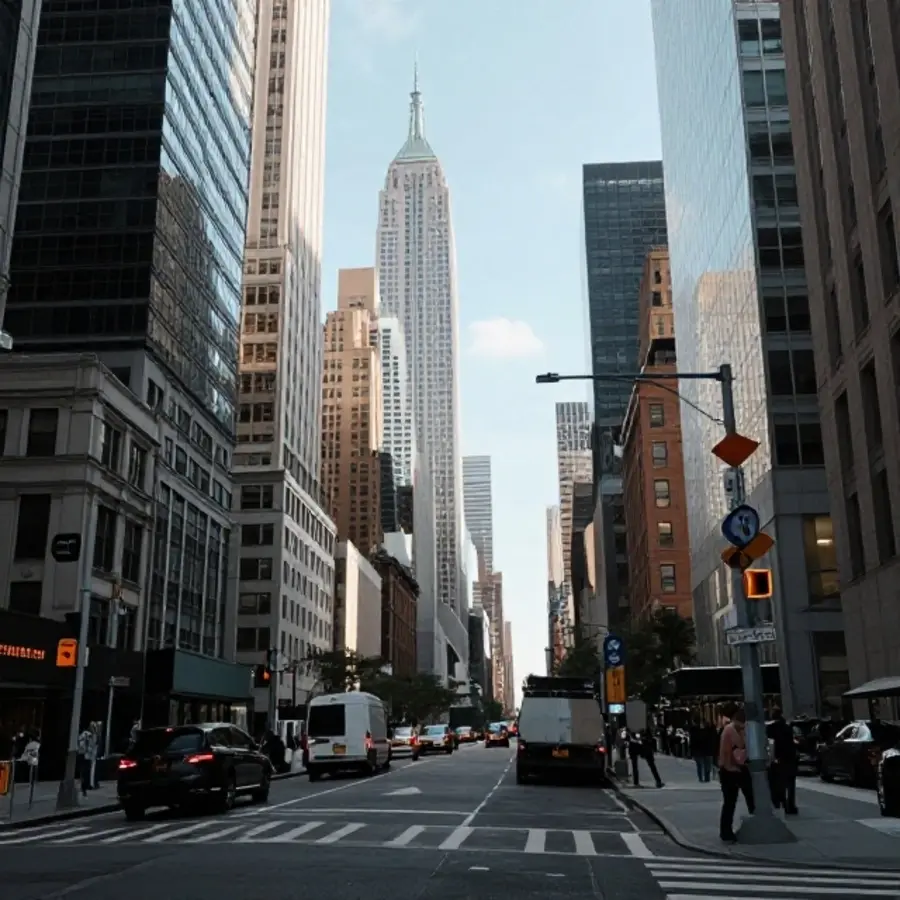
New York captions are short, punchy phrases that turn ordinary photos or videos of the city into magnetic social posts by highlighting its skyline, streets, food, and nonstop energy while inviting likes, comments, and shares from people who feel the same rush.
These lines work because they blend attitude, place names, and emotion in ways that feel native to the five boroughs.
When you pair them with strong visuals and smart hashtags, they lift engagement rate and help posts travel farther than generic text ever could.
Unlocking the Street-Level Spark That Makes Captions Stick
- Start with a single sensory detail like the smell of pretzels or the rattle of a subway car so the reader lands inside the moment instead of outside it.
- Pair that detail with a feeling people already know, such as the quiet pride of walking home after a late night, and the caption suddenly feels shared rather than performed.
- Keep the total length under twelve words when the photo already does heavy lifting; shorter text lets the image breathe and still delivers the punch.
- Use one strong verb that carries attitude—hustle, glow, bounce—rather than soft fillers that dilute the city’s edge.
- Test the line out loud; if it sounds natural when spoken on a crowded sidewalk, it will sound natural in a feed.
- Leave room for the reader to finish the thought; a half-open sentence often earns more comments than a fully closed one.
- Match the caption’s rhythm to the photo’s energy—quick beats for a busy intersection, slower ones for a quiet park bench.
- Avoid listing every landmark in one post; one clear focus creates stronger recall and better hashtag relevance.
- Swap out overused city nicknames for fresher local flavor so the post feels current instead of recycled.
- Place the strongest word near the end so the last thing the eye sees is the one that lingers.
- Revisit the caption after a night’s sleep; the second look usually reveals the word that can be cut without losing meaning.
- Treat every caption as a tiny conversation starter rather than a finished statement, and watch replies climb.
Mapping Borough Energy into Lines People Actually Save
- Manhattan energy favors sharp, upward-moving phrases that mirror glass towers and fast decisions.
- Brooklyn lines lean warmer and slightly rebellious, perfect for brownstone stoops and warehouse windows.
- Queens captions thrive on multicultural flavor and quiet resilience that rewards longer observation.
- Harlem phrases carry rhythm and history, so the text itself should feel like it has a pulse.
- Staten Island posts gain strength from understatement and wide-open space after the density of the other boroughs.
- Rotate the borough focus across a week so your grid never feels locked into one zip code.
- Let the visual cue the borough first; the caption then only needs to deepen what the eye already sees.
- Local followers notice when language matches the real vibe of their neighborhood and reward that accuracy with loyalty.
- Mix borough-specific references with universal feelings so outsiders still feel invited while insiders feel seen.
- Keep a running note of phrases overheard on each borough’s streets; real speech beats invented cool every time.
- Adjust tone by season—brisk in winter, expansive in summer—so the caption stays in step with the weather people are living.
- Measure which borough lines earn saves versus likes; saves often signal deeper connection than quick heart taps.
Turning Everyday Commutes into Caption Gold
- Capture the exact second the train doors close and the car becomes its own temporary world.
- Notice the stranger who holds the door one extra beat and turn that small kindness into a single clean sentence.
- Use the reflection in the subway window as both visual and verbal mirror for the day’s mood.
- Translate the sound of the announcement into a short rhythmic line that people can almost hear.
- Highlight the coffee cup still warm in the hand as proof that the morning has already begun its fight.
- Contrast the silence of early cars with the later crush so the caption shows time moving through the system.
- Mention the specific station only when it adds story rather than mere location.
- Let the caption end on the platform rather than the destination so the journey itself becomes the point.
- Pair a blurry motion shot with crisp text to balance chaos and clarity.
- Keep hashtags secondary; the commute story should stand without them first.
- Reuse the same commute photo with a new angle of text weeks later to test which framing travels farther.
- Track comments that mention “same” or “felt that”; those replies prove the caption hit shared experience.
Crafting Skyline Lines That Feel Fresh After a Thousand Photos
- Focus on one tower’s light rather than the entire jagged horizon so the caption stays specific.
- Describe the color shift at dusk instead of naming the buildings everyone already recognizes.
- Use the distance between viewer and skyline as emotional space—close for intimacy, far for awe.
- Let weather rewrite the line; rain turns glass into mirrors, snow softens edges, wind adds motion.
- Avoid the word “iconic” entirely; the photo already carries that weight and the caption can do better work.
- Place a human scale element—tiny figures, a single window lit—so the towers feel inhabited.
- Write the caption as if speaking to someone who has never seen the view and still keep it under fifteen words.
- Test vertical versus horizontal crops; the caption often needs slight adjustment to match the new composition.
- Save skyline posts for golden or blue hour when natural light does half the emotional labor.
- Rotate between day and night versions of the same angle to show the city’s two personalities.
- Measure dwell time on skyline posts; longer pauses usually mean the caption successfully slowed the scroll.
- End with an open invitation rather than a closed statement so people feel free to add their own skyline memory.
Feeding the City’s Appetite with Taste-Driven Phrases
- Name the exact dish only if the photo already shows it; otherwise let texture and steam do the naming.
- Capture the first bite’s expression in words so readers almost taste it themselves.
- Pair late-night food with the quiet of empty streets for contrast that feels authentic.
- Mention the corner or counter only when it adds neighborhood texture rather than free advertising.
- Use temperature words—scalding, chilled, just-melted—to make the caption sensory without extra length.
- Let the sauce drip or the steam rise become the visual hook the text simply confirms.
- Rotate between solo meals and shared tables so the feed shows both solitude and connection.
- Avoid ranking or declaring “best”; preference is personal and captions that claim otherwise feel forced.
- Keep the line short enough that the food photo remains the star.
- Test food captions on Reels versus static posts; motion often needs even fewer words.
- Watch which food lines earn recipe requests or location questions; those signal high intent.
- Return to the same spot months later with a new caption to show how both the place and the writer have changed.
Translating Night Lights into Words That Glow
- Focus on one neon sign’s color and let that single hue carry the entire mood.
- Describe the wet pavement reflecting the lights so the caption adds depth the photo may only hint at.
- Capture the exact second the street empties and the lights feel personal rather than public.
- Use verbs that suggest movement even in a still frame—flicker, pulse, spill.
- Keep the caption darker in tone when the photo is bright so contrast creates interest.
- Mention the time only if it changes the meaning; 2 a.m. carries different weight than 9 p.m.
- Pair a solitary figure with wide light for loneliness that still feels glamorous.
- Avoid naming every club or bar; mystery often outperforms a full itinerary.
- Test the caption against both phone and desktop views; night photos can lose detail on smaller screens.
- Save pure night posts for midweek when feeds feel less crowded and the glow can stand out.
- Track saves on night captions; people often collect them for later inspiration.
- End the line with a quiet invitation rather than a shout so the mood stays intact.
Seasonal Shifts That Rewrite the Same Streets
- Spring captions lean into first green shoots against concrete for contrast that feels earned.
- Summer lines stretch longer and looser, matching the city’s open windows and slower evenings.
- Autumn phrases tighten around color and the first cool wind that makes people walk faster.
- Winter text becomes more intimate, focusing on shared warmth inside rather than the cold outside.
- Reuse the same corner photo across seasons with completely different captions to show time’s effect.
- Let weather dictate verb choice—drizzle softens, heat intensifies, snow hushes.
- Keep seasonal references subtle enough that the post still works months later.
- Pair seasonal captions with matching color grades so the whole post feels intentional.
- Watch engagement patterns by season; certain tones perform better when the weather matches the feed.
- Avoid holiday clichés unless the photo itself demands them; the city has its own calendar.
- Note which seasonal lines get shared outside the city; those travel farthest.
- Build a small archive of seasonal versions so future posts start stronger.
Local Versus Visitor Perspectives in Caption Voice
- Local voice assumes shared knowledge and skips the obvious landmarks.
- Visitor voice allows wider wonder without apology for still being amazed.
- Blend the two by writing as if explaining a private detail to a new friend.
- Locals notice when captions over-explain and reward understatement.
- Visitors appreciate context that helps them feel less lost.
- Rotate perspectives across a series so the feed never feels one-note.
- Let the photo’s composition decide the voice; intimate shots favor local tone.
- Test the same photo with both voices and compare comment quality.
- Keep local slang light so it invites rather than excludes.
- Avoid declaring ownership of the city; belonging is shown, not claimed.
- Measure which perspective earns more profile visits from people already living here.
- Return to older posts and rewrite the caption from the opposite viewpoint for fresh life.
Building Quiet Community Through Shared City Lines
- Ask a gentle question that only people who know the city can answer fully.
- Reference a shared frustration—delays, crowds, heat—without turning the caption into complaint.
- Celebrate small wins that feel universal: finding a seat, catching the light, finishing the day.
- Tag location only when it adds story rather than fishing for discovery.
- Reply to every early comment with the same energy the caption set; consistency builds trust.
- Feature follower stories in later posts so the community sees itself reflected.
- Keep the tone inclusive even when the reference is hyper-local.
- Use captions that work as conversation openers rather than monologues.
- Notice which lines generate the longest comment threads and study their structure.
- Avoid performing cool; authenticity travels farther than posture.
- Track the ratio of local versus distant commenters over time.
- End community-focused captions with an open door rather than a closed opinion.
Measuring What Actually Moves the Needle on Visibility
- Watch save rate more closely than like count; saves signal lasting value.
- Note which captions earn profile visits rather than one-off hearts.
- Compare engagement rate on caption-heavy posts versus image-only ones in the same week.
- Track how long people dwell on posts with longer versus shorter text.
- Test the same visual with three different caption lengths and log the results.
- Observe whether certain hashtags amplify or dilute the caption’s voice.
- Measure reach difference between weekday and weekend posts carrying similar lines.
- Look at share quality—private stories versus public reposts—as a deeper signal.
- Review comment sentiment separately from volume; positive depth beats empty volume.
- Revisit older high-performing captions and update only the weakest words.
- Keep a simple log of what worked without turning measurement into obsession.
- Let the data guide the next ten captions rather than the next hundred.
Pairing Captions with Motion for Reels That Travel
- Match caption length to the Reel’s first three seconds so the text lands before the swipe.
- Use on-screen text that complements rather than repeats the spoken or written caption.
- Keep the written caption short enough that it does not compete with the moving image.
- Let the Reel’s audio carry emotion while the caption supplies place or context.
- Test captions that appear mid-Reel versus those that sit under the video.
- Align the caption’s rhythm with cuts so the words feel timed rather than stuck on.
- Avoid overcrowding the caption with hashtags; save those for the first comment.
- Study which motion-caption pairs earn the highest completion rate.
- Reuse strong static captions as starting points for new Reels and adapt them.
- Watch how captions perform when the Reel is sound-off versus sound-on.
- Keep accessibility in mind so the text remains readable even on smaller screens.
- Treat every Reel caption as a chance to invite the next view rather than close the current one.
Keeping the Practice Alive Without Losing the City’s Pulse
- Collect overheard phrases in a notes app the moment they appear.
- Revisit the same block every few months and write a new line from the new perspective.
- Limit daily caption writing to one focused session so quality stays high.
- Read the caption back in the voice of someone who has never been here.
- Cut any word that exists only to sound clever rather than true.
- Share the drafting process occasionally so followers feel part of the making.
- Protect a few private moments from captions so the practice stays joyful.
- Rotate between highly polished and deliberately rough lines to keep the feed human.
- Let quiet periods happen without forcing content; the city will supply new material.
- Study captions from accounts outside New York for fresh structural ideas.
- Celebrate small improvements in clarity or engagement without needing viral proof.
- Return to the first caption you ever wrote and notice how far the voice has traveled.
Conclusion
New York captions work best when they feel like they could only have been written here and yet somehow speak to anyone who has ever chased a feeling bigger than themselves.
The strongest lines do not try to summarize the entire city; they simply open a single window and invite people to look through it with you.
Keep the practice honest, keep the language tight, and keep listening to the streets.
The next great caption is already waiting on the next corner—write it down, post it clean, and watch what happens when the right words meet the right moment.

Noah Parker enjoys creating original pick up lines that are funny, smooth, and easy to use. He writes playful content inspired by online trends, dating culture, and everyday conversations.